Indian Attars in Ancient & Medieval Cultures: Aromatic Traditions

Fragrance has accompanied human culture for thousands of years. Among the many aromatic traditions that shaped early perfumery, the craft of Indian attars stands out as one of the most enduring. Developed and refined during the medieval Mughal period, attars represent a living link between ancient botanical knowledge and the artistry of traditional distillation.
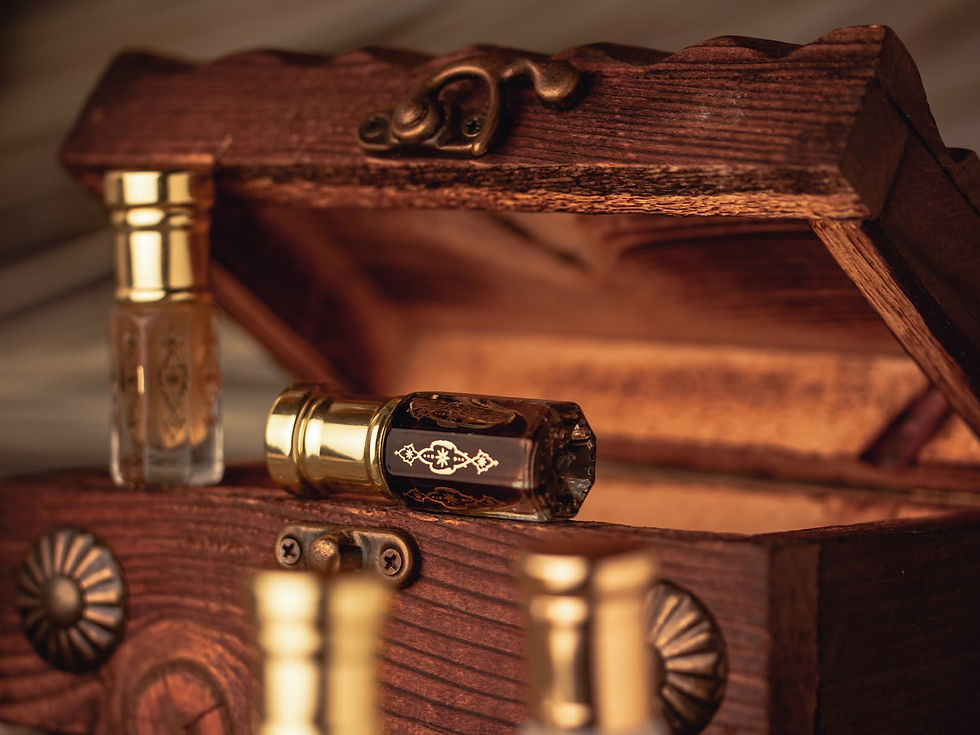
Early Aromatic Traditions in Vedic India: Attar Fragrances in Antiquity
Although attars as a distilled perfume did not yet exist in ancient India, the subcontinent’s aromatic heritage reaches deep into the Vedic era (c. 1500–500 BCE). Vedic literature describes the use of fragrant oils, herbal pastes, resins, and botanical preparations in ritual, medicine, and daily life. Texts such as the Bhagavata Purana (compiled between the 8th and 10th centuries CE from earlier oral traditions) recount scenes of scented unguents, perfumed offerings, and the ritual use of aromatic substances. These early practices reveal a sophisticated understanding of botanicals long before the development of attar distillation.
What the Vedic and Puranic sources preserve is not the process of attar making, but the cultural foundation that later allowed attars to flourish. India’s long familiarity with sandalwood, vetiver, jasmine, and resinous aromatics created an environment where a more advanced perfumery craft could emerge. When the Mughal courts arrived in the 16th century, they brought Persian aesthetics, rosewater distillation, and a refined appreciation for scent — but the technical innovation of attar production was shaped in India itself. The deg–bhapka apparatus, the use of sandalwood oil as a base, and the multi‑day hydro‑distillation process developed in North India, particularly in Kannauj, where local guilds blended Mughal patronage with indigenous botanical knowledge.
In this way, India’s aromatic lineage forms a continuous arc: Vedic botanical traditions → Purāṇic cultural memory → Mughal technical refinement. The attars of medieval India were not an imported craft, but the culmination of centuries of Indian fragrance culture enriched by Persian influence and perfected through local innovation.
Indian Attars in the Mughal Era
By the medieval period, India’s long aromatic heritage entered a new phase under the Mughal courts. While the Mughals brought Persian aesthetics, poetry, and a cultivated appreciation for scent, the technical craft of attar distillation developed in India itself. Persian perfumery had mastered rosewater distillation and aromatic pastes, but the defining features of attars—hydro‑distillation into sandalwood oil, the use of copper deg vessels, and the receiver bhapka—were innovations shaped by Indian artisans.
Attars became highly prized for their refinement and complexity. They were used in courtly rituals, personal fragrance traditions, religious ceremonies, and even medicinal or cooling preparations during the intense summer heat. The Mughal emperors, particularly Akbar and Jahangir, encouraged experimentation with local botanicals such as jasmine, vetiver, marigold, and blue lotus. Their courts valued fragrance not only as personal adornment but as an element of architecture, ceremony, and refined daily life.
This patronage helped transform earlier Indian aromatic traditions into a sophisticated perfumery craft. In the distillation centers of North India, especially Kannauj—often called India’s perfume capital—hereditary guilds refined the deg–bhapka apparatus and perfected multi‑day distillation techniques that infused delicate vapors into sandalwood oil. Mughal support for botanical cultivation and trade networks allowed attars to flourish as both cultural expression and sensory art.
Persian influence shaped the aesthetic language of Mughal perfumery—its symbolism, its poetic associations, and its courtly rituals—while Indian innovation supplied the technical foundation. The result was a uniquely Indo‑Persian fragrance tradition: culturally blended, botanically rich, and technically distinct.
The Deg-Bhapka Method
Traditional attar making relies on the paired copper distillation apparatus known as deg–bhapka. The deg is the heating vessel where botanicals and water are combined, while the bhapka is the receiver that collects the condensed aromatic vapors. Although Persian perfumers had long mastered rosewater distillation, the specific technique of hydro‑distilling botanicals into a base oil—especially sandalwood oil—developed in India and reached its height under Mughal patronage.
In practice, flowers or herbs such as rose, vetiver, jasmine, kewda, or hina are placed in water inside the deg. As the mixture warms, aromatic vapors travel through tightly sealed bamboo pipes into the bhapka, where they condense and infuse into a waiting base oil. Historically, this base was pure Mysore sandalwood oil, prized for its ability to absorb and preserve delicate aromatic compounds. The process is slow, often lasting several days, and requires constant attention to temperature, airflow, and the balance of botanicals.
The deg–bhapka method represents the technical heart of attar craft: a fusion of Mughal refinement, Persian aesthetic influence, and Indian innovation. It is this careful, multi‑day distillation—rooted in the workshops of Kannauj—that gives attars their depth, longevity, and unmistakable character.
Botanical Profiles
The botanicals used in traditional attars reflect both India’s ecological richness and the aesthetic preferences of the Mughal courts. Each plant contributes its own character to the distillate, shaped by climate, soil, harvesting practices, and the skill of the distiller. Some botanicals, such as rose and vetiver, were cultivated specifically for perfumery, while others—like kewda or hina—were gathered seasonally from regions where their fragrance reached its peak.
Rose (Rosa damascena)
Rose has long been central to Indo‑Persian fragrance culture. Its distillation into sandalwood oil produces a warm, rounded floral profile that differs markedly from Persian rosewater. In attar form, rose becomes deeper, more resinous, and more enduring.
Vetiver (Khus)
Vetiver roots yield a cooling, earthy aroma prized during India’s hot seasons. Mughal palaces famously hung vetiver mats over windows and fountains; in attars, the root’s distilled essence becomes both refreshing and grounding.
Jasmine (Jasminum sambac)
Jasmine’s nocturnal blossoms were gathered before dawn for distillation. Their fragrance, intensely floral and slightly green, was favored in courtly settings and remains one of the most iconic notes in Indian perfumery.
Kewda (Pandanus fascicularis)
Kewda flowers produce a bright, airy aroma with a distinctive sweetness. Their distillation requires careful timing, as the blossoms bruise easily and lose potency if handled roughly.
Hina (a blend of herbs, flowers, and spices)
Hina is one of the most complex attar profiles, traditionally composed of dozens of botanicals. Its warm, spicy, and slightly smoky character reflects centuries of experimentation in Kannauj’s distillation guilds. Hina is considered a warming fragrance, in contrast to vetiver, which is traditionally regarded as cooling. This balance between warming and cooling aromatics has long been part of India’s sensory and seasonal fragrance culture.
Together, these botanicals form the sensory vocabulary of attars: floral, earthy, cooling, sweet, resinous, and deeply atmospheric. Their profiles reveal how Indian perfumers blended local flora with Mughal tastes and Persian sensibilities, creating a fragrance tradition that remains distinct within the global history of perfumery.
Suggested Viewing
For a clear visual explanation of how attars are made, 'Business Insider' produced an excellent short documentary on the traditional Deg–bhapka method.
Curator’s Reflection
Attars represent a living craft — a blend of botany, heat, patience, and cultural memory. Their survival in Kannauj is a testament to artisans who continue distilling fragrance the way their ancestors did centuries ago. In a world of modern perfumery, attars remain a reminder of fragrance’s deep cultural roots. If you appreciate the historical and cultural roots of fragrance, please visit the Museum of Fragrance for similar stories.
Connect With Us
For inquiries or to explore your collection further Contact us or email john@matchlessgifts.com. Your dedicated team is here to assist you on your aromatic journey and help you find the perfect perfume oil to suit your preferences. Experience the timeless allure of fragrances from Matchless Gifts today. Sold as a curio only. No magical effect is guaranteed.


Comments